How to Shop Online Safely and Spot Fake Websites Before They Steal Your Money
Online shopping has become second nature to most of us. Whether you’re buying groceries at midnight or hunting for the perfect gift, the convenience of clicking a button and having items delivered to your doorstep is undeniable. But here’s the uncomfortable truth: for every legitimate online store, there are dozens of fake websites waiting to trap unsuspecting shoppers.

I learned this lesson the hard way a few years ago when I thought I’d found an incredible deal on a designer handbag. The website looked professional, the prices seemed reasonable (not suspiciously cheap), and they even had customer reviews. Three weeks later, I was still waiting for my package, and my bank statement showed a mysterious charge for double what I’d authorized. That experience taught me that knowing how to shop safely online isn’t just helpful, it’s essential.
The Real Cost of Fake Websites
Before we dive into how to protect yourself, let’s talk about why this matters. Fake websites aren’t just annoying, they’re dangerous. When you enter your credit card information on a fraudulent site, you’re not just losing money on a product you’ll never receive. You’re handing over your personal details, payment information, and sometimes even your identity to criminals.
According to recent data, online shopping scams cost consumers billions of dollars annually. But the financial loss is just the beginning. Victims often spend months dealing with fraudulent charges, credit report damage, and the emotional stress of having their trust violated. Some fake websites are so sophisticated that even tech-savvy shoppers fall for them.
The scary part? These fake sites are getting better. Gone are the days when you could spot a scam website from a mile away because of terrible grammar and outdated design. Today’s fake sites often look identical to legitimate retailers, complete with professional photos, detailed product descriptions, and seemingly authentic customer service contacts.
Understanding How Fake Websites Operate
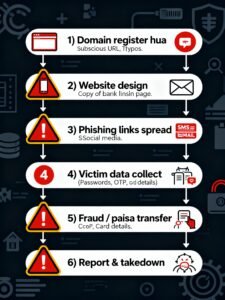
Fake websites typically fall into a few categories. Some are completely fabricated stores that exist only to steal your information. Others are copycat sites that mimic real retailers down to the last pixel. Then there are hijacked sites where hackers have taken over legitimate but poorly secured websites to redirect payments to their own accounts.
Many fake shopping sites follow a predictable pattern. They pop up suddenly, often around major shopping holidays like Black Friday or Christmas. They advertise heavily on social media with deals that seem too good to pass up. They collect payments and information for a few weeks or months, then vanish without a trace. By the time victims realize something is wrong, the website is gone, and the criminals are nowhere to be found.
Some fake websites don’t even bother with the pretense of sending products. They’re purely data harvesting operations designed to collect credit card numbers and personal information that can be sold on the dark web. Others might send you a cheap knockoff item or nothing at all, betting that most people won’t go through the hassle of reporting the fraud.
The Tell-Tale Signs of a Fake Website
Learning to recognize fake websites is your first line of defense. While scammers are getting more sophisticated, there are still red flags that can help you identify fraudulent sites before you hand over your money.
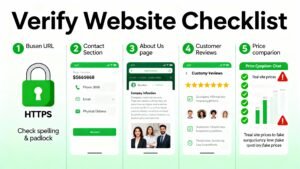
Start with the URL. This is one of the most important things to check. Legitimate websites use standard domain extensions like .com, .org, or .net. Be extremely cautious of unusual extensions or URLs that are slightly misspelled versions of well-known brands. For example, instead of “amazon.com,” a fake site might use “amazzon.com” or “amazon-deals.shop.” Scammers count on you not noticing these small differences.
Look for the padlock symbol in your browser’s address bar. This indicates the site uses HTTPS, meaning your connection is encrypted. However, and this is crucial, just because a site has HTTPS doesn’t mean it’s legitimate. Scammers can get security certificates too. The padlock tells you the connection is secure, not that the website itself is trustworthy.
Check the website’s contact information. Legitimate businesses provide multiple ways to reach them: a physical address, phone number, and email address. If a site only offers a contact form or an email address from a free service like Gmail or Yahoo, that’s a major red flag. Try calling the phone number if one is provided. Many fake sites list fake numbers that go nowhere.
Read the “About Us” page carefully. Legitimate companies tell you their story, their mission, and provide details about their business. Fake websites often have vague, generic “About” pages with stock photos and copied text. If you can copy a sentence from their About page and find it word-for-word on other websites, you’ve likely found a scam.
Look at the product prices. Yes, everyone loves a good deal, but if prices seem impossibly low, they probably are. If a website is selling brand-new iPhones for half the retail price or designer shoes for 90% off, ask yourself why. Legitimate businesses need to make a profit. Prices that are drastically lower than everywhere else suggest the products are either counterfeit or nonexistent.
Check for professional design and functionality. While not all legitimate small businesses have perfect websites, most established retailers invest in professional design. Look for broken links, poor grammar, low-quality images, or layouts that don’t work properly. These often indicate a hastily constructed fake site.
Search for reviews, but not just on the website itself. Any site can post fake positive reviews. Instead, search for the company name plus words like “scam,” “review,” or “complaints” in Google. Check independent review sites, consumer protection forums, and social media. If the site is new and has no online presence outside of its own website, proceed with extreme caution.
How to Shop Online Safely
Now that you know what to watch out for, let’s talk about the proactive steps you can take to protect yourself every time you shop online.
First, stick with retailers you know and trust whenever possible. While this might limit your options, it dramatically reduces your risk. If you’re considering buying from a new site, do your homework first. Spend ten minutes researching the company before you spend your money.
Use a credit card instead of a debit card for online purchases. Credit cards offer better fraud protection, and if something goes wrong, the money comes from the credit card company while they investigate, not directly from your bank account. Many credit cards also offer virtual card numbers, a temporary number that links to your account but can’t be used if stolen.
Consider using payment services like PayPal, Apple Pay, or Google Pay when available. These services act as intermediaries, so the merchant never gets your actual credit card number. They also offer buyer protection programs that can help you get your money back if something goes wrong.
Keep your devices and browsers updated. Software updates often include security patches that protect against the latest scams and hacking techniques. Use antivirus software and keep it updated as well. While it won’t catch every scam, it can protect you from malware and phishing attempts.
Create strong, unique passwords for each shopping account. I know, I know, remembering dozens of passwords is a pain. That’s why password managers exist. They generate strong passwords and remember them for you. If a hacker breaches one website, they won’t be able to use your password to access your other accounts.
Be extremely cautious with emails and social media ads. Scammers often use fake emails that look like they’re from legitimate retailers or create ads for fake websites. Instead of clicking links in emails or ads, type the website address directly into your browser. This ensures you’re going to the real site, not a fake one.
Never shop on public Wi-Fi networks. Coffee shop and airport Wi-Fi might be convenient, but they’re also incredibly insecure. Hackers can intercept your information when you’re using public networks. If you must shop while you’re out, use your phone’s cellular data instead.
Check your bank and credit card statements regularly. Don’t wait for your monthly statement. Check your accounts every few days for any charges you don’t recognize. The sooner you catch fraud, the easier it is to resolve.

What to Do If You Think You Have Been Scammed
Despite your best efforts, sometimes scams slip through. If you think you’ve been scammed, act quickly. Time is critical in limiting the damage and potentially recovering your money.
Contact your bank or credit card company immediately. Report the fraudulent charge and ask them to stop any pending transactions. Most financial institutions will issue you a new card and start a fraud investigation. The sooner you report it, the better your chances of getting your money back.
Change your passwords, especially if you used the same password on the fake site that you use elsewhere. Start with your email and financial accounts, then move on to your shopping accounts.
Report the fake website to the appropriate authorities. In the United States, report it to the Federal Trade Commission at ReportFraud.ftc.gov. If you’re in another country, contact your national consumer protection agency. Also report the site to Google Safe Browsing so they can warn other users.
Document everything. Take screenshots of the website, save all emails and receipts, and write down the timeline of events. This documentation will be valuable for your fraud report and any potential legal action.
Warn others. Post about your experience on social media, review sites, and consumer forums. Your warning might save someone else from the same fate. However, stick to the facts and avoid exaggeration, which could potentially create legal issues for you.
Monitor your credit report. If you gave the fake site enough information, identity theft is a risk. Get free copies of your credit report from the major credit bureaus and watch for any accounts opened in your name.
Special Situations and Seasonal Scams
Certain times of year and types of products attract more scammers than others. Being aware of these high-risk situations helps you stay extra vigilant.
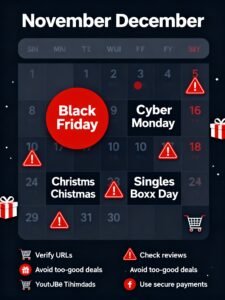
Holiday shopping season is prime time for fake websites. From Black Friday through the New Year, scammers know people are spending more money and shopping at a faster pace. They create fake sites offering incredible deals on popular gifts. During these times, be especially careful about shopping from unfamiliar websites, even if the deals look amazing.
Luxury goods and electronics are favorite targets for scammers. If you’re shopping for high-end handbags, jewelry, name-brand electronics, or designer clothing, verify the seller carefully. Many fake sites specialize in these categories because the profit potential is high.
Concert tickets, event passes, and travel bookings attract scammers looking for quick money. Only buy tickets from official venue websites, authorized ticket sellers, or well-established marketplaces with buyer protection. Third-party ticket sites require extra scrutiny.
Pandemic-related products have created new opportunities for scammers. Whether it’s medical supplies, work-from-home equipment, or fitness gear, high-demand items attract fraudulent sellers. Stick with established retailers for essential items.
Tools and Resources That Can Help
You don’t have to navigate online shopping safety alone. Several tools and resources can help you verify websites and protect your information.
Browser extensions like Web of Trust (WOT) and Norton Safe Web rate websites based on user experiences and security scans. They’ll warn you before you visit a potentially dangerous site. While not perfect, they add an extra layer of protection.
The Better Business Bureau website lets you look up businesses and see their ratings, complaint history, and accreditation status. Before buying from an unfamiliar company, check their BBB profile.
Reverse image search is incredibly useful when you suspect a website is fake. If product photos look too professional or too perfect, do a reverse image search in Google. If those same images appear on multiple different websites, you’ve likely found a scam that’s using stolen product photos.
Scam reporting websites like Scamadviser.com analyze websites and provide trust scores based on various factors. While you shouldn’t rely entirely on these scores, they can provide helpful information when evaluating unfamiliar sites.
Your credit card company’s app often includes features to help you shop safely. Some let you create virtual card numbers for online shopping or send instant notifications for every charge, helping you spot fraud immediately.
Teaching Others About Online Shopping Safety
If you’re reading this, you’re now more informed than most people about online shopping safety. Share this knowledge with friends and family, especially those who might be more vulnerable to scams.
Older relatives who didn’t grow up with the internet often fall victim to online scams. Take time to walk them through how to shop safely. Show them what to look for and what to avoid. Offer to help them verify websites before they make purchases.
Teenagers and young adults might be internet-savvy, but they’re often overly trusting of online deals and social media advertising. Talk to them about the risks and help them develop healthy skepticism about too-good-to-be-true offers.
Make online safety a regular conversation in your household. Share articles about new scams, discuss attempts you’ve noticed, and celebrate smart decisions to avoid questionable websites. The more normal these conversations become, the more alert everyone will stay.
The Bottom Line
Online shopping should be convenient and enjoyable, not stressful and risky. By understanding how fake websites operate, knowing what red flags to watch for, and taking smart precautions, you can shop online with confidence.
Remember, if something feels off about a website, trust your instincts. It’s always better to walk away from a deal than to risk your financial security and personal information. There will always be another sale, another promotion, another opportunity. But recovering from fraud takes time, energy, and sometimes money you’ll never get back.
The internet has opened up a world of shopping opportunities, giving us access to products and prices that previous generations could never imagine. Don’t let fear of scams keep you from enjoying these benefits. Instead, shop smart, stay informed, and make online safety a habit rather than an afterthought.
Your future self, and your bank account, will thank you for taking the time to shop safely. And who knows? The few extra minutes you spend verifying a website might save you from becoming another statistic in the growing number of online shopping fraud victims. Happy shopping, and stay safe out there.
Pingback: Online Shopping Surakshit Kaise Karein